In this section the optimal insurance is regarded as a problem of insurance company. We start from the simplest case of single company insuring a single object.
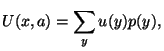
The expected utility of this object
 is a probability of wealth
  ,
,
 is an utility function of the wealth .
 is the rate of insurance charge.
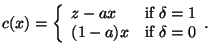
Suppose that

and
 is the market value of the object,
 denotes insurance charge of the object.
 is insurance policy of the object.
 , if the object survives,
 , if not.
 is a survival probability of the object.
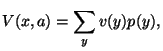
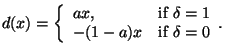
The expected utility of the insurance company
is a probability of profit ,
 is an utility function of the profit .

 is defined by the owner of object which
maximizes his utility
(15) depending on the rate of insurance charge .
The equilibrium between interests of the company and the customer
is achieved when both insurance policy and
insurance charge satisfies Nash conditions.
is defined by the owner of object which
maximizes his utility
(15) depending on the rate of insurance charge .
The equilibrium between interests of the company and the customer
is achieved when both insurance policy and
insurance charge satisfies Nash conditions.