First we fix the initial values, the "Contract-Vector"
 . The transformed values, the
"Fraud-Vector"
. The transformed values, the
"Fraud-Vector"
 , are obtained by
maximizing the utilities
, are obtained by
maximizing the utilities  and
and  respectively.
The maximization is
performed under the assumption that partners
honor the contract
respectively.
The maximization is
performed under the assumption that partners
honor the contract

 into the vector
  . To make expressions
shorter denote this transformation by
. To make expressions
shorter denote this transformation by 
 , where
exists, if the feasible set
, where
exists, if the feasible set  is convex
and all the profit functions are convex
[2]. We obtain the equilibrium directly by
iterations (23), if the transformation is contracting
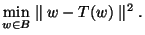
[4]. If not, then we minimize the square deviation
is convex
and all the profit functions are convex
[2]. We obtain the equilibrium directly by
iterations (23), if the transformation is contracting
[4]. If not, then we minimize the square deviation
The problem can be directly extended to  competing companies
and
competing companies
and  individually insured objects. The only obstacle is dimensionality
of related optimization problem. For example, in this case one
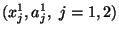
searches for equilibrium of four variables
individually insured objects. The only obstacle is dimensionality
of related optimization problem. For example, in this case one
searches for equilibrium of four variables
 where variables
  are controlled by customers
responding to insurance charges
are controlled by customers
responding to insurance charges  that are defined by coresponding insurance companies.