


While estimating the scales 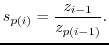 , we consider three direct estimation procedures and also the method of least squares.
The first direct estimation procedure is the empirical one.
The scales 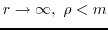 describing the impact of all sorts of events including the partial and the multiple ones are estimated as the relations (2.53) or (2.56) of the call rates in the pair of periods
 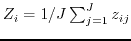 and
and  which precede the present period
  and the next one
  .
The numerator
.
The numerator 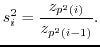 is the call rate
![[*]](file:/usr/share/latex2html/icons/footnote.png) of the period preceding the next one and the denominator
of the period preceding the next one and the denominator  is the call rate of the period preceding the present one.
Using the empirical procedure partial and multiple special events are considered as different SE. In this case scales
are defined separately for each of them. Therefore the empirical procedure is convenient if the data is available for all the types of periods including the partial and multiple ones.
In such a case estimation of the delays  and durations
  of DSE
is not needed because it is supposed that an identical situationcan be found examining the past observations.
We need a lot of data for that.
of DSE
is not needed because it is supposed that an identical situationcan be found examining the past observations.
We need a lot of data for that.
The second direct procedure is the subjective one. This means that
all the unknown parameters of the expert model such as
the scales , the delay times and the duration times
are defined in accordance with the expert opinion.
This is a reasonable way starting a new system when no data is available.
The third direct procedure is a mixture of the empirical and the subjective ones.
We use empirical estimation if the corresponding data is available.
We use subjective estimation otherwise.
Using the method of least squares we search for such scales , such delay and duration times  which minimize the sum of squared differences between the call rates predicted by the expert model and the observed call rates
  .
.
All four procedures are applied to different time periods: hours, days,
weeks and seasons. First, the scalar case when we predict a single number, an average call rate of the next period, will be considered. In the vector case, a vector which components define call rates of different parts of the next period is regarded.