


Under independence conditions, the standard deviation  of the results
  of a statistical model depends on the number of observations
  as
as
 |
(91) |
 is the "initial" standard deviation and
 |
(92) |
 and
and 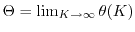 denotes the expectation.
In Monte Carlo simulation 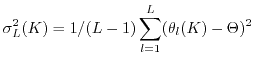 cannot be estimated directly using
the results
cannot be estimated directly using
the results  obtained by the 1-th observation. Many observations are needed to reach a stationary state (one observation means one call). Therefore we repeat the Monte Carlo simulation
  times performing observations each time.
In this case the standard error can be estimated as
times performing observations each time.
In this case the standard error can be estimated as
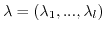 is known

